Surfing in Porto: Spots, Seasons and Surf Schools for Every Level
Porto is one of the few European cities where you can take the metro to a surf lesson. The beach at Matosinhos is 30 minutes from the historic centre, it works all year round and it is among the most forgiving places on the Portuguese coast to stand up on a board for the first time. More experienced surfers have a choice of beach breaks and one excellent right-hander within half an hour’s drive.
This guide covers the spots, the seasons, what to wear and how to plan a surf trip around the city.
Why Porto works as a surf destination
- Consistency: the north of Portugal faces straight into Atlantic swell. Flat days are rare outside midsummer.
- Variety: sheltered bays for learners and exposed beaches for those who want more power, all close together.
- A city attached: when the waves are poor, there is a World Heritage old town, port wine cellars and some of the best seafood in the country to fall back on.
- Price: lessons, rentals and meals cost less than in the better-known surf towns further south.
When to surf
- September to November: the best all-round season. Autumn swells arrive, the water is at its warmest and the wind is often light.
- December to March: big, powerful swell. Excellent for experienced surfers on the right days; beginners stick to the most sheltered corners.
- April to June: reliable, medium-sized waves and longer days.
- July and August: small waves and a northerly afternoon wind. Ideal for first lessons, best in the morning.
Water temperature and wetsuits
The sea here is cold all year, kept cool in summer by upwelling along the coast. Expect roughly 13 to 14 degrees in winter and 16 to 18 in late summer.
- Winter: a 4/3 mm wetsuit, plus boots for most people.
- Spring and autumn: 4/3 mm.
- Summer: 3/2 mm is enough on warmer days.
Surf schools include a wetsuit and board in the price of every lesson, so there is no need to travel with equipment.
The spots
Matosinhos
The main beach, sheltered by the long harbour wall of the Port of Leixões. The wall takes the edge off the swell and produces mellow, regular waves over sand. It is the centre of surfing in Porto, with a dozen or so schools on the beach.
- Level: beginners and improvers. Good for longboards.
- Good to know: it gets busy in summer and at weekends. On big winter days it is often the only surfable spot nearby.
- Access: metro line A to Matosinhos Sul.
Leça da Palmeira
Just north of the harbour, more exposed and noticeably more powerful. Several peaks along the beach.
- Level: intermediate upwards.
- Good to know: works best on small to medium swells.
Praia Internacional and Castelo do Queijo
At the southern end of Matosinhos, by the fort on the Porto boundary. A little more swell gets in than at the main beach.
- Level: improvers and intermediates.
The Gaia coast: Canide, Miramar and Aguda
South of the river, a run of beach breaks with fewer people in the water. Conditions vary with the sandbanks.
- Level: all levels, depending on the day. Local schools know where it is working.
- Access: by car, or by train to Miramar or Aguda.
Espinho
The best-known wave in the region: a right-hander that breaks off the jetty and can run a long way on a good swell. There are easier beach peaks either side.
- Level: experienced surfers on the main wave. Be respectful; it is a local favourite.
- Access: direct train from Porto in around 30 minutes.
Taking lessons
A typical group lesson lasts 90 minutes to two hours and includes a warm-up, safety briefing, board and wetsuit. Expect to pay around 30 to 40 euros, with discounts for packs of several lessons. Private lessons and children’s classes are widely available, usually from the age of six or seven.
EcoHost guests get 25% off with two partner schools: SurfItBox in Matosinhos, 400 metres from our OceanBreeze apartment, and Okira2Surf on the Gaia coast, five minutes from Gaia Beach&Golf. Just show your booking.
Staying safe
- Surf at lifeguarded beaches when you are learning, and follow the flags.
- Rip currents form next to jetties and rocks. If caught in one, paddle parallel to the shore.
- After very heavy rain, water quality at city beaches can drop for a day or two. Check local notices.
- Give way to the surfer nearest the peak, and do not paddle out at a spot beyond your level.
A sample three-day surf and city break
- Day 1: morning lesson at Matosinhos, grilled fish for lunch, afternoon exploring Porto’s old town by metro.
- Day 2: second lesson or free surf with a rental board. Afternoon at the Siza Vieira tidal pools and lighthouse in Leça da Palmeira.
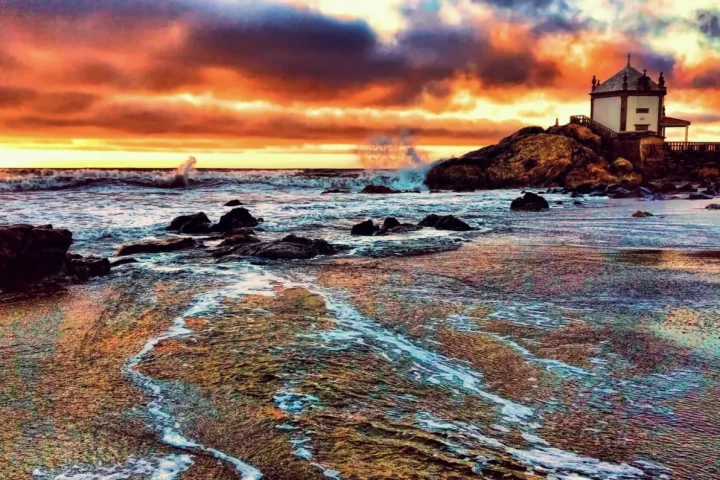
- Day 3: drive or take the train to the Gaia coast, surf at Miramar or Aguda and see the Senhor da Pedra chapel at sunset.
Where to stay for a surf trip to Porto
An apartment beats a hotel room for surfers: somewhere to hang a wetsuit, a washing machine, a kitchen for early breakfasts and space for boards.
- Matosinhos: OceanBreeze has two bedrooms, sea views, a balcony and a free garage space. OceanSide and OceanGreen each sleep four in Matosinhos Sul.
- Gaia coast: Gaia Beach&Golf is a large two-bedroom apartment with a garage and bikes, close to Miramar and Aguda.
All have self check-in, so a late arrival after a long drive is never a problem, and all welcome dogs.
Plan your surf trip: check availability at ecohost.pt and book direct to get the partner discount on lessons.
Frequently asked questions
Is Porto good for beginner surfers?
Yes. Matosinhos has soft, regular waves over sand, lifeguards in season and plenty of schools with English-speaking instructors.
Can you surf in Porto in winter?
You can, and many locals prefer it. The swell is bigger and more consistent. Beginners should take lessons rather than go out alone, and a 4/3 mm wetsuit is essential.
Do I need a car to surf in Porto?
Not for Matosinhos, which is on the metro. A car or the train helps for the Gaia coast and Espinho.
Are there surf camps in Porto?
Yes. Several schools sell packages of lessons with accommodation. Booking an apartment and lessons separately gives you more flexibility and is often cheaper for couples and families.